

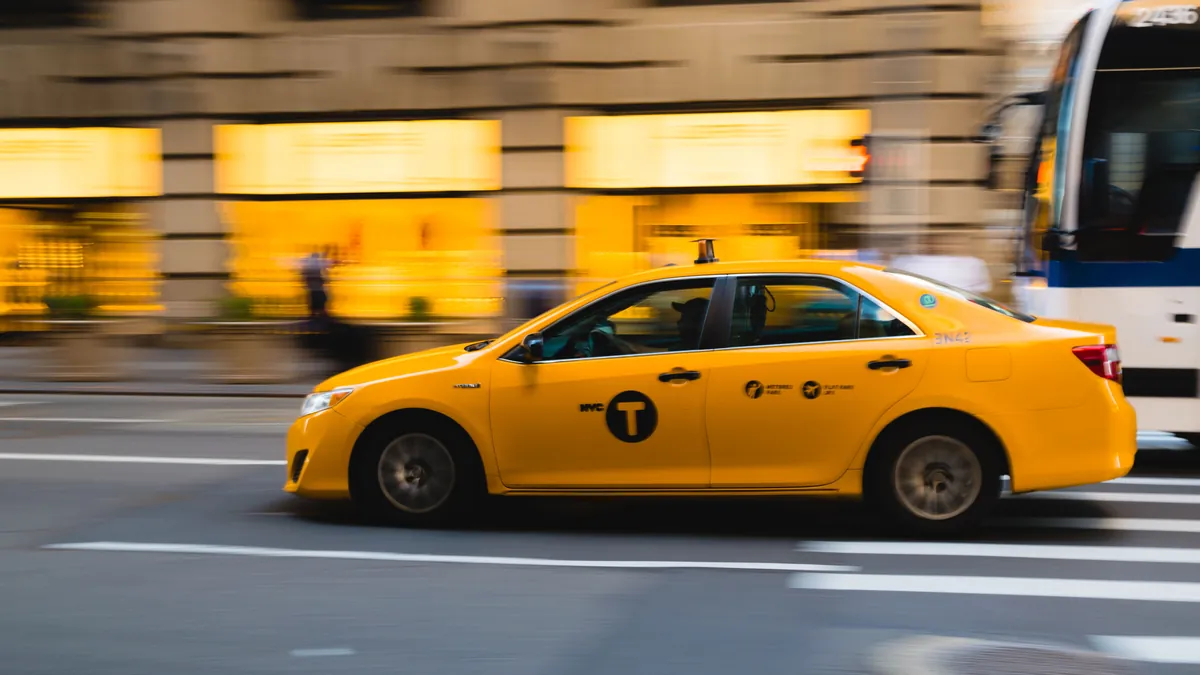
Consider the middle button on a New York taxi’s card reader. On some journeys out of LaGuardia Airport, pressing it meant leaving the driver 20 per cent of the fare. In a cab fitted with a rival system, the middle button meant 25 per cent. Two passengers could take much the same ride, make what felt like the same choice and leave their drivers different shares of the fare.1
Economists Kareem Haggag and Giovanni Paci uncovered that quirk in their 2014 study of more than 13 million New York City taxi journeys. Higher suggestions pushed up the average card tip. They also produced a larger share of receipts with zero in the tip field. A passenger could still have handed the driver cash. Imagine being the driver trying to read a verdict on your work into that receipt. Even the make of the card reader had a say.21
The passenger’s part in paying the porter
There was a time when Americans argued that tipping was an altogether European habit. It spread in the US after the Civil War, when it was already familiar across the Atlantic. As late as 1916, the American writer William R. Scott objected that tipping imported an aristocratic view of who should defer to whom. A republic, in his view, ought to have outgrown that relationship.3
In a railway industry where race largely determined who could get which jobs, Pullman hired Black men to look after its passengers overnight. A porter bought the polish for his passengers’ shoes and paid for his own uniform. He was expected to answer the bell even during his hours off. Passengers took to calling every porter ‘George’, the first name of the company’s founder, as if none of them had a name of his own.456
In 1914 California’s railroad commission concluded that Pullman deliberately relied on passengers’ tips to cover part of what its employees earned. The porters organised. Founded in New York in 1925 and led by A. Philip Randolph, their Brotherhood of Sleeping Car Porters secured a contract with Pullman in 1937. It raised pay and gave workers a formal way to challenge unfair treatment. That agreement counted for something even on a night when the last passenger kept his change.64
What the restaurant bill leaves open
A visitor eating dinner in California can leave a tip knowing that state law requires the employer to pay at least the applicable minimum wage before tips. In states that allow the federal tip credit, an employer may, under certain conditions, count some of the tips a worker actually receives towards the federal minimum wage. The employer must make up any shortfall for the working week. Identical gestures at the table can do different things on a worker’s payslip.78
Visitors looking for a single American convention are in good company. In a 2023 Pew Research Center survey, 72 per cent of US adults said tipping was expected in more places than five years earlier. The setting still mattered. Among adults who ate at restaurants with table service, 92 per cent said they often or always tipped there. Among those who bought drinks in coffee shops, only a quarter said the same about that purchase.910
The coffee comes after the question
At dinner, the bill gives you a moment to recognise something the server has already done. At a counter you may be asked to tip while your drink exists only as an order. In a series of studies, customers who were asked to tip before the service was complete left smaller tips and were more inclined to think someone was trying to steer their choice.11
You might still be glad to leave something for the person making your coffee. There is work in that cup, even if your exchange at the till took a few seconds. There are two people facing each other across the counter. The person who decided how much the barista would earn from the price of the coffee can sit this conversation out.
More from Marnival: five days in New York City.
Sources and notes
- Haggag and Paci, full paper. The two payment systems at LaGuardia. ↩
- Kareem Haggag and Giovanni Paci, Default Tips, American Economic Journal: Applied Economics, 2014. ↩
- Pew Research Center, How Americans feel about the basics of tipping. Historical background, including William R. Scott in 1916. ↩
- National Park Service, Pullman Porters. The union’s founding, A. Philip Randolph and the 1937 agreement. ↩
- Kenneth J. Schoon, Pullman: Model Town, Model Historic Site. Uniforms, shoe polish and porters’ costs. ↩
- National Park Service, Historic Resource Study of Pullman National Monument. Calls during rest hours, the name ‘George’, pay and the 1914 finding of California’s railroad commission. ↩
- California Department of Industrial Relations, Tips and gratuities, question 8. Minimum wage and tips in California. ↩
- U.S. Department of Labor, Fact Sheet #15: Tipped Employees Under the FLSA. Conditions of the federal tip credit. ↩
- Pew Research Center, How Americans see recent developments in tipping. Perceived expectations in 2023. ↩
- Pew Research Center, Services Americans do and don’t tip for. Self-reported behaviour by service. ↩
- Nathan Warren, Sara Hanson and Hong Yuan, Feeling Manipulated: How Tip Request Sequence Impacts Customers and Service Providers?, Journal of Service Research. Four studies on when customers are asked to tip. ↩
Last checked: .